← Back to ResourcesCompliance & Safety
 View
View
 View
View
 View
View
 View
View
 View
View
 View
View
 View
View
The Workplace Safety Benefits of Plastic Pallets — a Practical Guide
By Eco Pallets New Zealand
Published Updated 14 min read
Share:
Ask anyone who has spent years on a warehouse floor and they’ll have a pallet story. A splinter driven through a glove. A load that lurched because one deck board had quietly rotted. The 4pm shuffle of dragging damaged timber pallets to the “do not use” corner — again. None of these make incident reports on their own, but they’re the background noise of injury risk in New Zealand warehouses, and the humble pallet sits underneath a surprising amount of it.
Plastic pallets remove several of those hazards at the source: no nails to work loose, no boards to splinter, no timber to soak up water and fail without warning. They also bring consistent dimensions that forklifts, racking and automated systems can rely on. But let’s be honest from the outset, because safety writing should be: changing pallet material does not make a workplace safe on its own. The pallet still has to match the load, the racking, the handling equipment and the environment — and a damaged plastic pallet needs quarantining just as urgently as a damaged timber one. This guide covers where plastic genuinely reduces risk, where it doesn’t, and how to select and manage pallets as part of a real safety system.
Where plastic pallets reduce workplace risk,
| Workplace risk | How an appropriate plastic pallet helps |
| Cuts, punctures and splinters | Moulded construction — no timber splinters, protruding nails or broken boards |
| Hazardous manual handling | Many nestable and export designs are lighter than heavy reusable timber pallets |
| Unstable loads | Consistent dimensions and deck geometry improve load positioning |
| Hygiene and contamination | Non-absorbent surfaces clean more effectively than porous timber |
| Moisture-related deterioration | Plastic does not absorb water the way timber does |
| Forklift handling problems | Moulded entry points support repeatable, square fork placement |
| Hidden pallet damage | Cracks and deformation show clearly against a regular moulded shape |
| Export packaging complications | Plastic falls outside ISPM 15 timber-treatment requirements |
| Chemical leaks and spills | Pairs with bunds, spill pallets and spill-response equipment |
Those benefits vary between models — a lightweight export pallet, a rackable pallet and a steel-reinforced shuttle pallet are engineered for very different jobs. The sections below take each risk in turn.
1. No nails, splinters or broken boards
The most immediate difference is the one your team feels through their gloves. Timber pallets deteriorate in predictable, unpleasant ways: protruding nails, sharp splinters, cracked deck boards, loose blocks and jagged edges after repeated forklift strikes. Each defect is a cut, a puncture wound, a snagged sleeve — or torn cartons and damaged stock.
A moulded plastic pallet simply has none of those components. There are no boards to crack loose and no fasteners to back out, and the entry points stay uniform through years of service.
That’s not the same as damage-proof, and pretending otherwise would be poor safety advice. A heavily impacted plastic pallet can crack, deform or develop a sharp edge — and when it does, it belongs in quarantine, not back in circulation. New Zealand’s Health and Safety at Work Act places the duty squarely on the business to keep plant safe — and in practice that means designated storage for damaged pallets and a maintenance routine, regardless of material.
If deteriorating timber is what’s driving the change, start by comparing the complete plastic pallet range — light-duty through reinforced heavy-duty.
2. Lighter handling — where the model allows it
Watch what actually happens with empty pallets during a shift: workers separate stacks, drag pallets across floors, lift them onto piles, pull them off trucks. New Zealand’s WorkSafe guidance classifies tasks as hazardous manual handling when they involve repetitive movement, sustained or sudden force, or awkward postures — and empty-pallet handling ticks several of those boxes, with the pallet’s own weight setting the baseline effort.
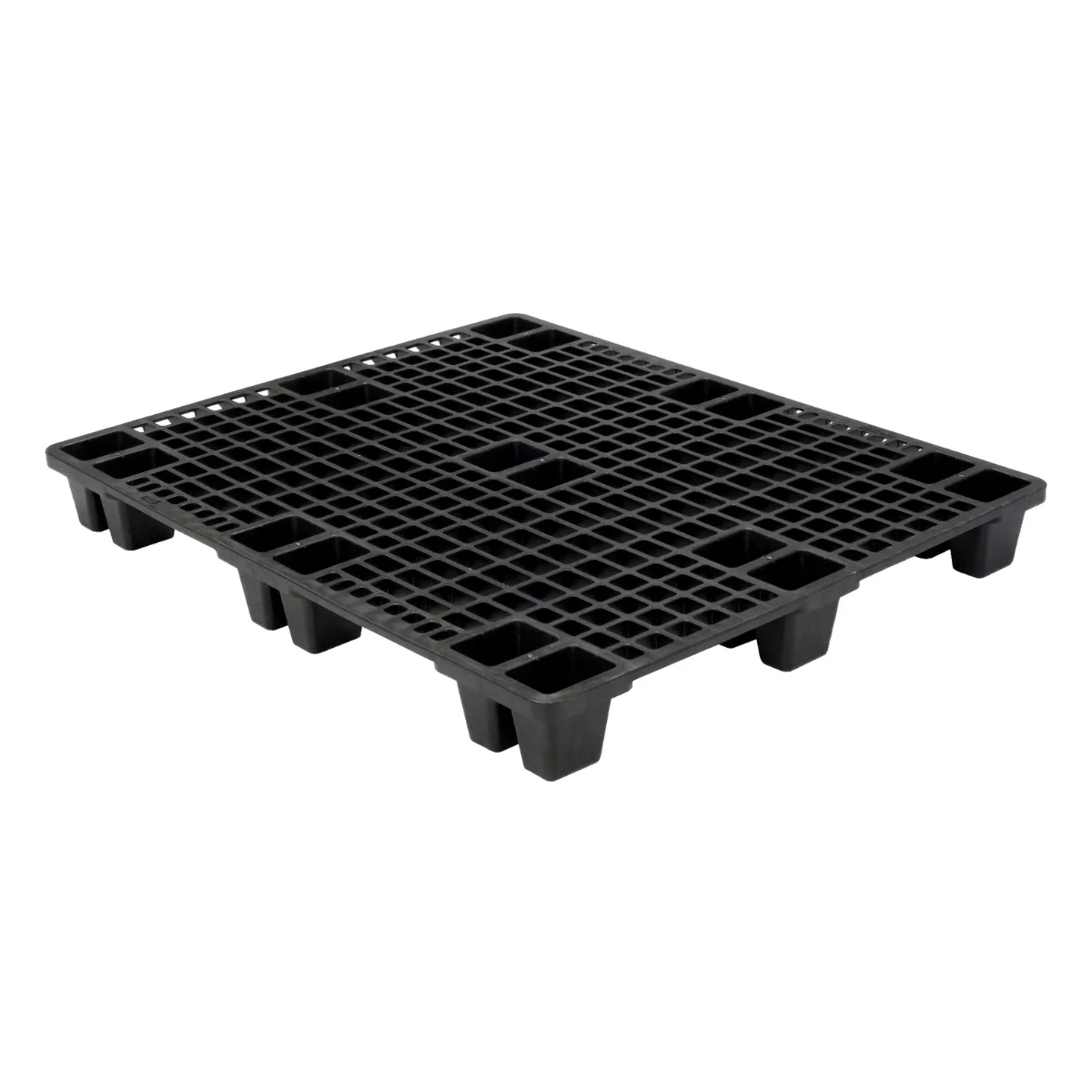
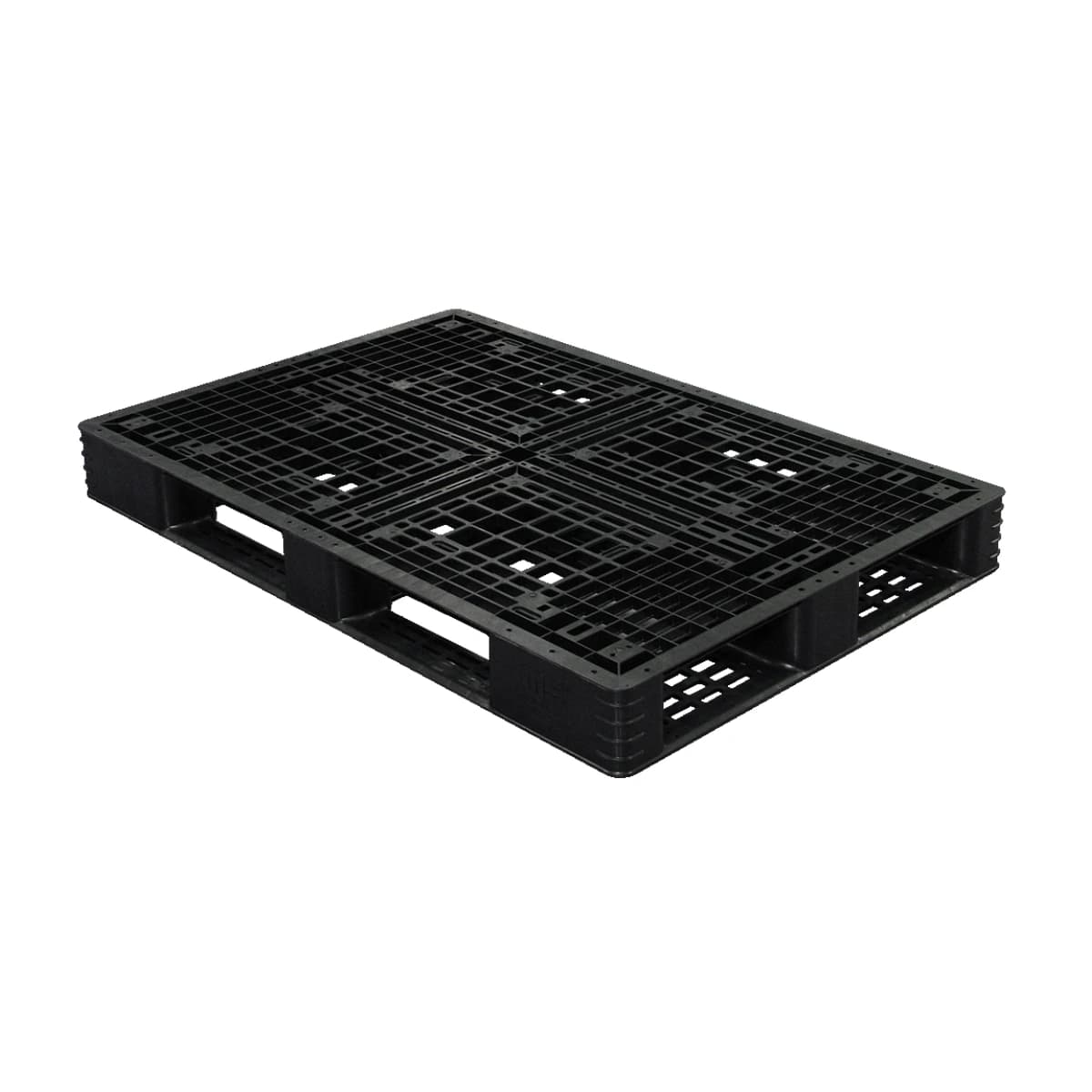
Many nestable and export plastic pallets carry a genuinely lower tare weight than heavy reusable timber pallets, which directly reduces the force in every one of those movements. Two of the pallets we supply most often for exactly this reason:
Lightweight & Nestable
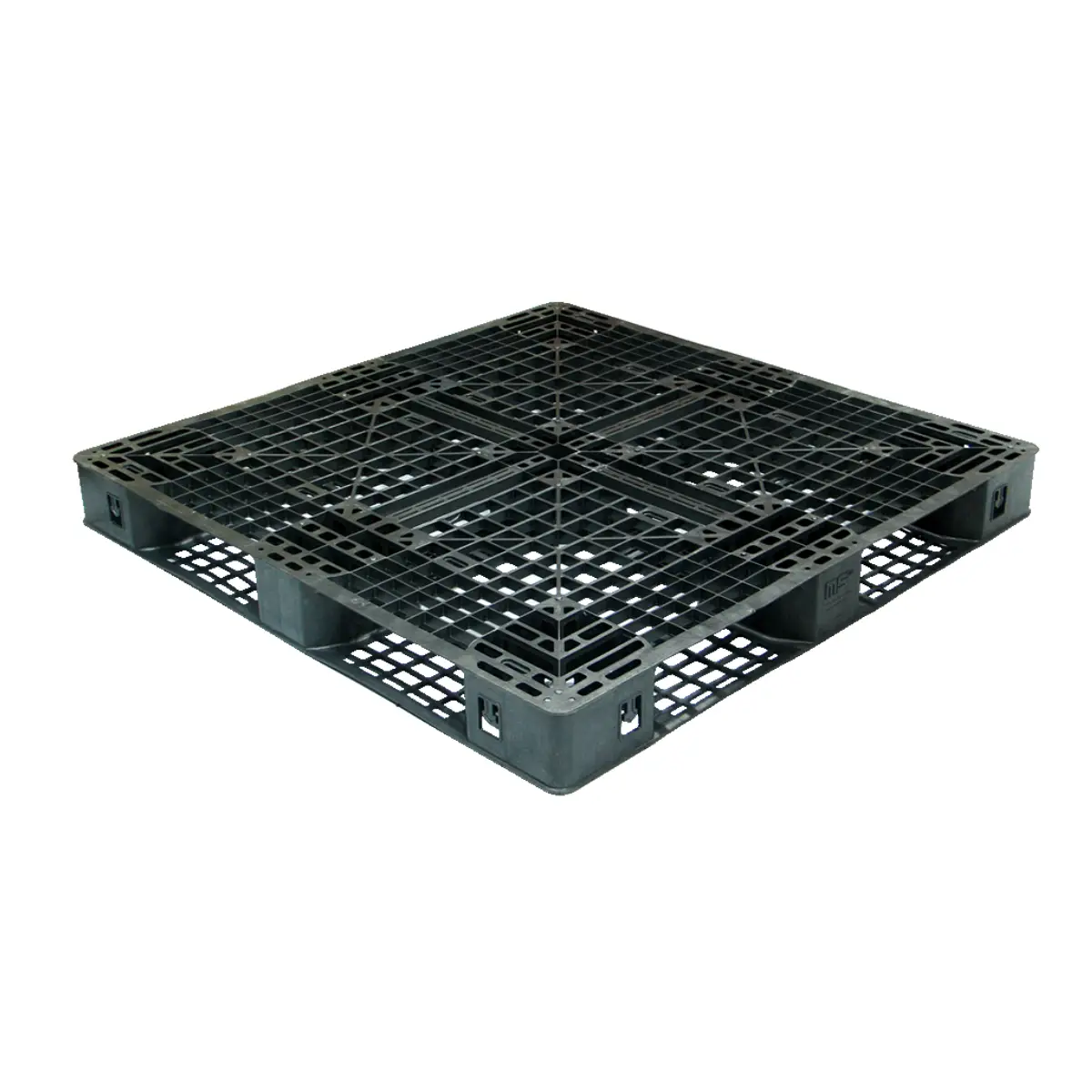
Nestable Plastic Export Pallet – 1200 x 1000mm
Euro Footprint
Euro Plastic Export Pallet – 1200 x 800mm
The honest counterpoint: not every plastic pallet is light. Rackable and steel-reinforced models can be substantially heavier because they’re built for demanding loads — so compare actual tare weights rather than assuming. And pallet choice supplements, never replaces, the fundamentals: mechanical aids, sensible stacking heights, worker consultation and a hazardous-manual-task assessment. WorkSafe New Zealand’s manual-handling guidance names lifting and stacking goods onto pallets among the tasks worth assessing.
3. Dimensions your racking and forklifts can trust
A twisted, swollen or badly repaired timber pallet is dimensionally unpredictable — and everything downstream inherits that unpredictability: fork entry, rack alignment, conveyor movement, stretch-wrapping, stacking stability. Plastic pallets come out of controlled moulds, so every pallet of a model is the same pallet, year after year.
That repeatability matters most where pallets meet fixed systems: selective racking, high-bay storage, shuttle systems, conveyors and wrapping equipment. Racking safety guidance in New Zealand is blunt about the requirement — unit loads must match the intended size, shape and weight of the racking system, sit level and stable, with loose goods secured by wrapping or strapping.
Racking-rated plastic pallets are a specialised subset of the range — tell us your beam configuration and load when you request a quote and we’ll match a rated model to it.
One rule with no exceptions: confirm the pallet’s racking load, support direction and beam configuration before it goes into a rack. A pallet with an impressive static rating can still be wrong for unsupported spans. And if automation is on your roadmap, raise it early in the selection conversation — in automated systems a damaged or non-uniform pallet usually means a person entering the machinery to clear it, which is exactly when those environments are least safe.
4. Moisture that stays outside the pallet
Timber absorbs water, oils and product residue. A wet timber pallet is heavier than its spec sheet says, dimensionally less stable, and harder to decontaminate — which matters in refrigerated storage, food processing, wash-down areas, laundries and outdoor freight handling.
Plastic doesn’t absorb moisture, so the pallet’s weight and condition stay predictable. The caveat a safety-minded reader will already have spotted: water or oil on a plastic deck is still a slip hazard and can reduce friction between pallet and load. Non-absorbent material narrows the problem to housekeeping and load restraint — it doesn’t delete it.
5. Cleaning that actually cleans
Food Standards Australia New Zealand (which sets the food-standards code on both sides of the Tasman) draws a distinction worth keeping in mind: cleaning removes dirt, grease and food waste; sanitising destroys microorganisms — and surfaces must be properly cleaned before they can be sanitised. Porous, grained, nail-recessed timber makes that first step genuinely difficult. A smooth, non-absorbent plastic deck makes it routine.
That’s why plastic pallets anchor hygiene programs in food and beverage production, pharmaceutical supply chains, agriculture, seafood and cold storage. But plastic construction alone doesn’t make a pallet food-safe — confirm the material suits the environment, whether it will contact unpackaged food, which detergents and wash temperatures will be used, and whether any cavities could hold water. Food-sector operators can start with our food and beverage industry solutions.
6. Damage you can actually see
An underrated safety property: because a plastic pallet has a regular moulded shape, damage announces itself. Cracks near fork entries, crushed runners, permanent deformation, a pallet that won’t sit flat — each stands out against the uniform profile during an ordinary visual check, in a way that “is that board cracked or just weathered?” never does with timber.
A workable inspection routine your team can run without slowing the shift: check before loading; look at fork-entry points and runners; confirm the pallet sits level; verify the load is within the relevant rating; quarantine anything questionable; and record repeat damage patterns. That last one earns its keep — repeated failures in the same spot usually point to a forklift habit, a racking misalignment or the wrong pallet for the job, and fixing the cause beats replacing the symptom.
7. Steadier forklift work
New Zealand forklift good-practice guidance includes a deceptively simple instruction: move only loads that are stable on the pallet. Plastic pallets support that stability with consistent fork-entry openings, smooth entry surfaces, four-way access on suitable models and no loose boards to obstruct the tines. Operators still own the fundamentals — square approach, correct fork position, no dragging — but the pallet stops working against them.
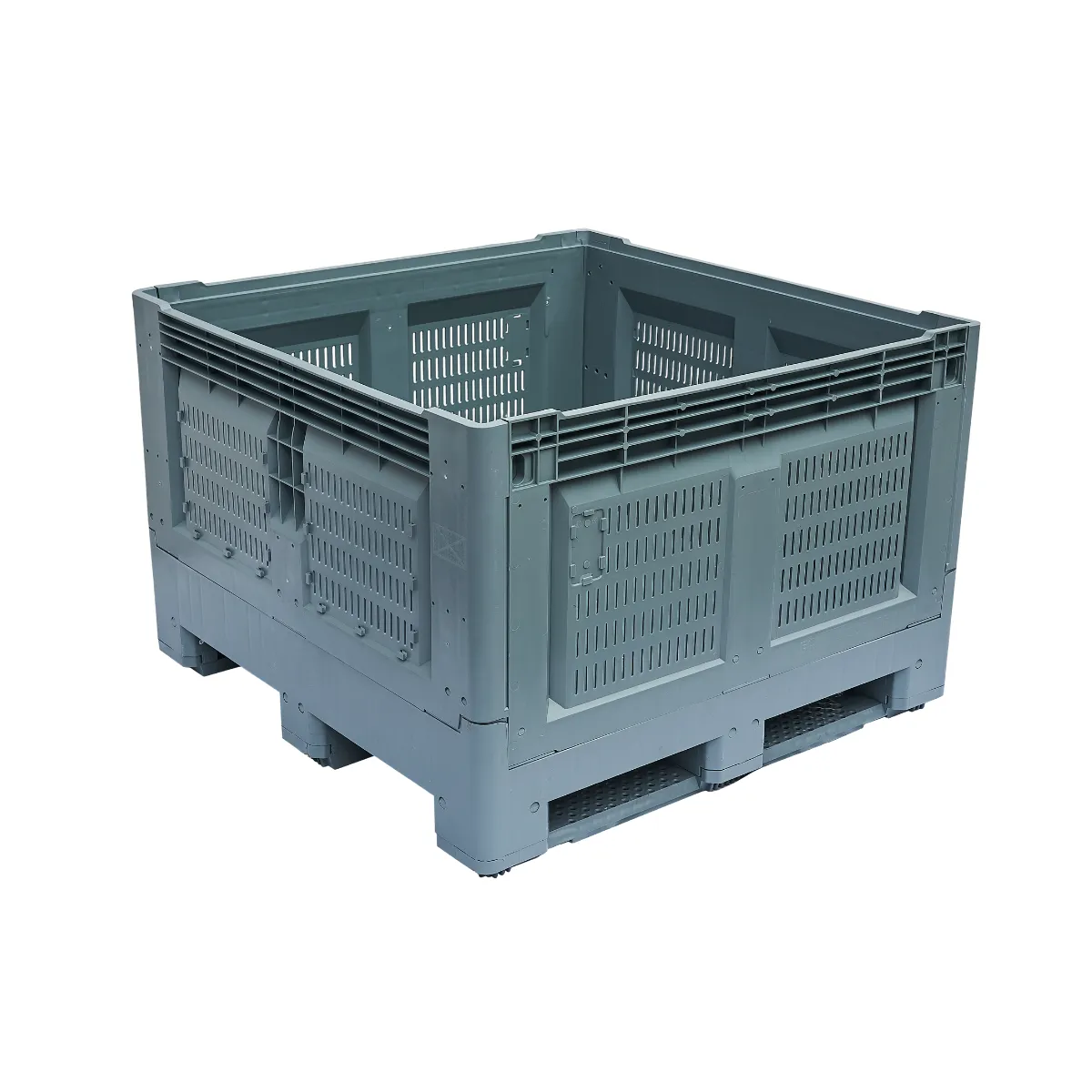
Where pallet-boxes suit the load better than pallet-plus-cartons, four-way-entry bulk containers keep the same handling flexibility:
Foldable Bulk Container
750L Foldable Bulk Container – 4-Way Entry
8. Load restraint that completes the unit load
A pallet is one part of a unit load — the cartons, bags or drums on top must stay put through storage and transport, and stock stored at height should be secured so nothing falls if the rack or load is struck. Consistent plastic edges and deck geometry make stretch-wrapping and strapping repeatable, and for loads that need mechanical restraint use rated lashing equipment matched to the job — ask our team about restraint options when you’re quoting a load.
One number to never confuse: a strap’s lashing capacity is not the pallet’s payload rating, and neither is proof the complete restraint system is adequate for the vehicle and route. Match the method to the load, pallet and transport conditions.
9. Export without timber-treatment hazards
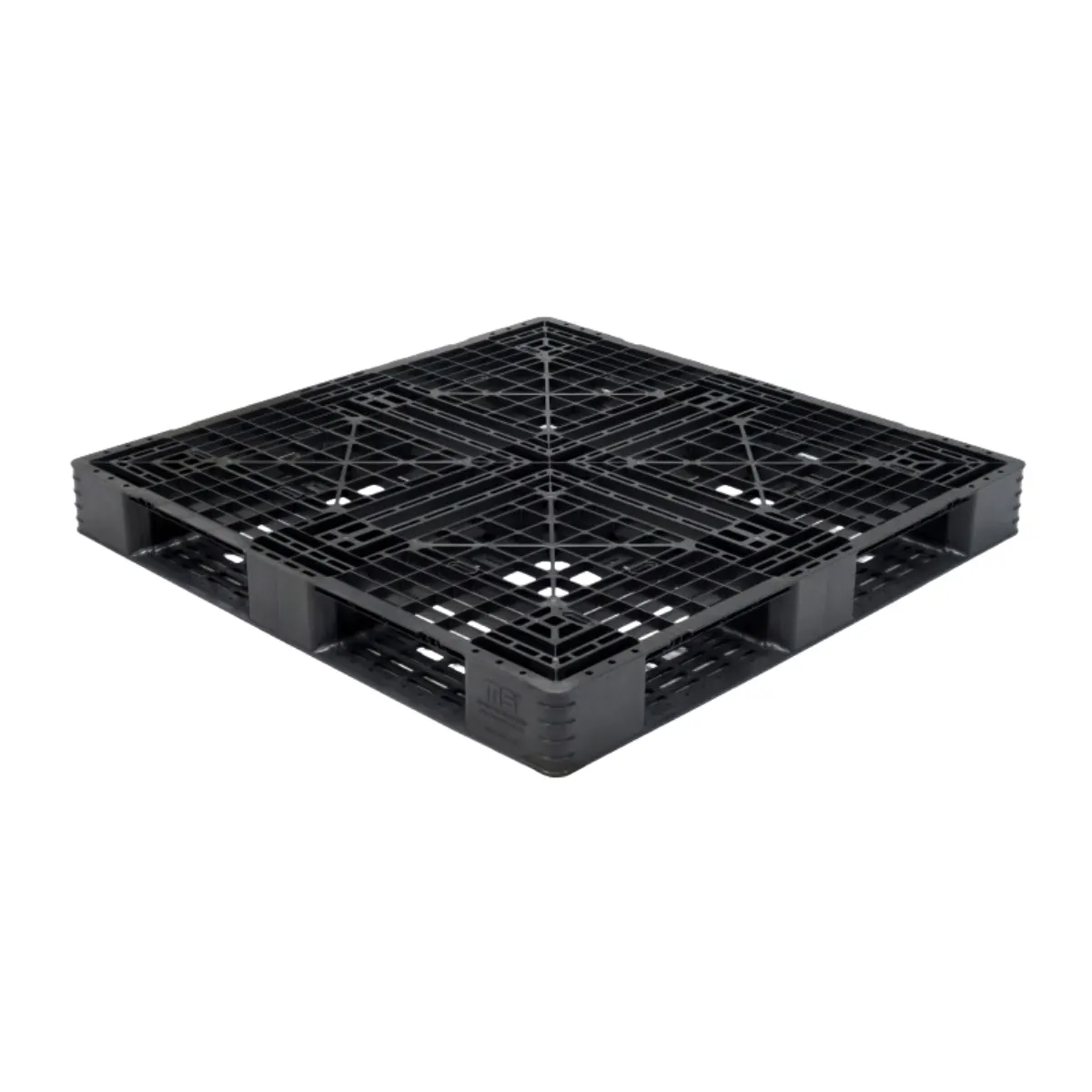
ISPM 15 governs raw wood packaging in international trade — treatment, marking, the lot. Plastic pallets sit entirely outside it: no heat treatment, no fumigation, no stamps to be missing or illegible at the border. For exporters, that removes a whole category of shipment-delay risk along with the treated-timber handling question. The export series is built for exactly this work:
Export Workhorse
Plastic Export Pallet – 1100 x 1100mm
Container-Optimised
Container-Optimised Export Pallet – 1140 x 1140mm
Destination countries still set their own cleanliness and biosecurity rules — verify before dispatch.
10. Chemical handling with proper containment
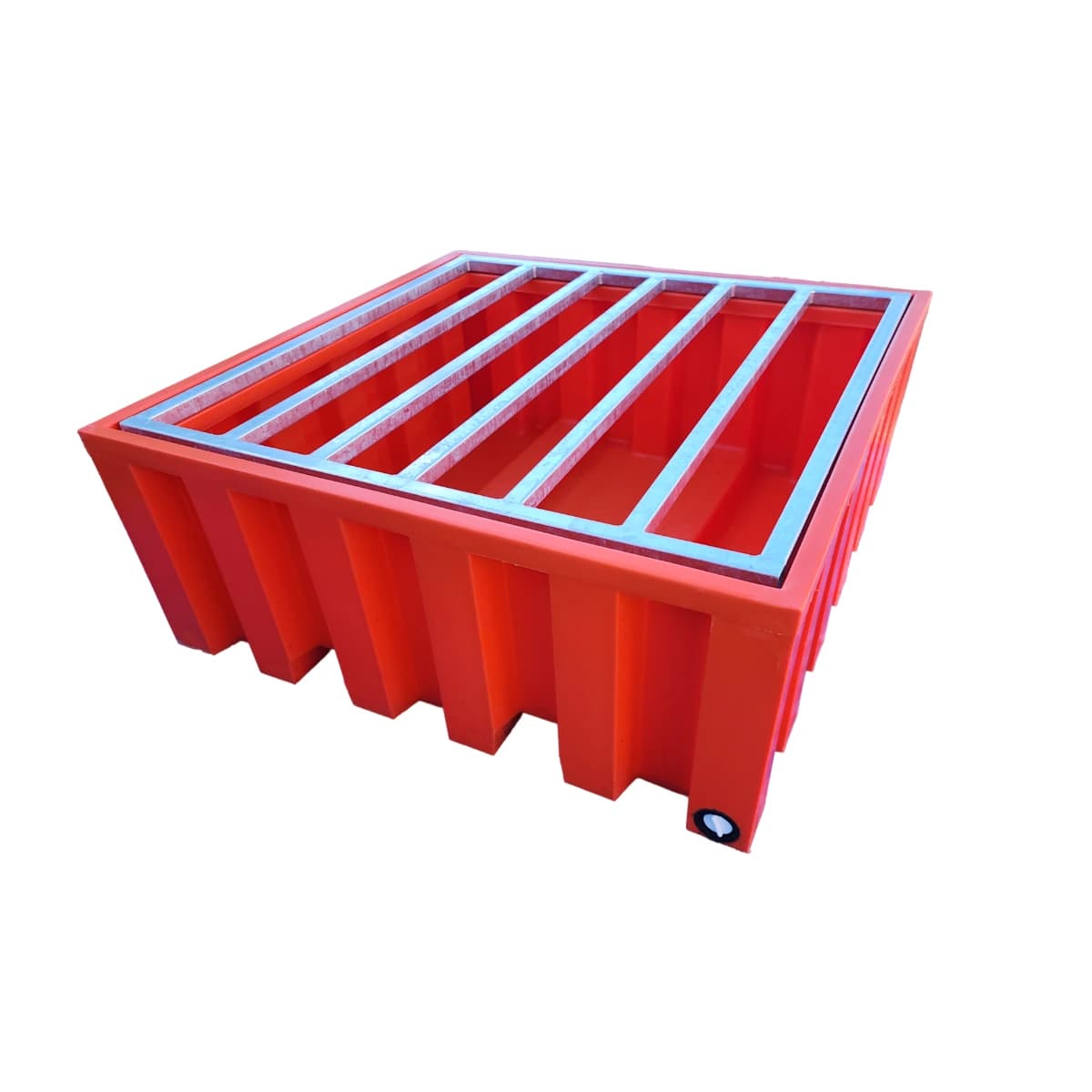
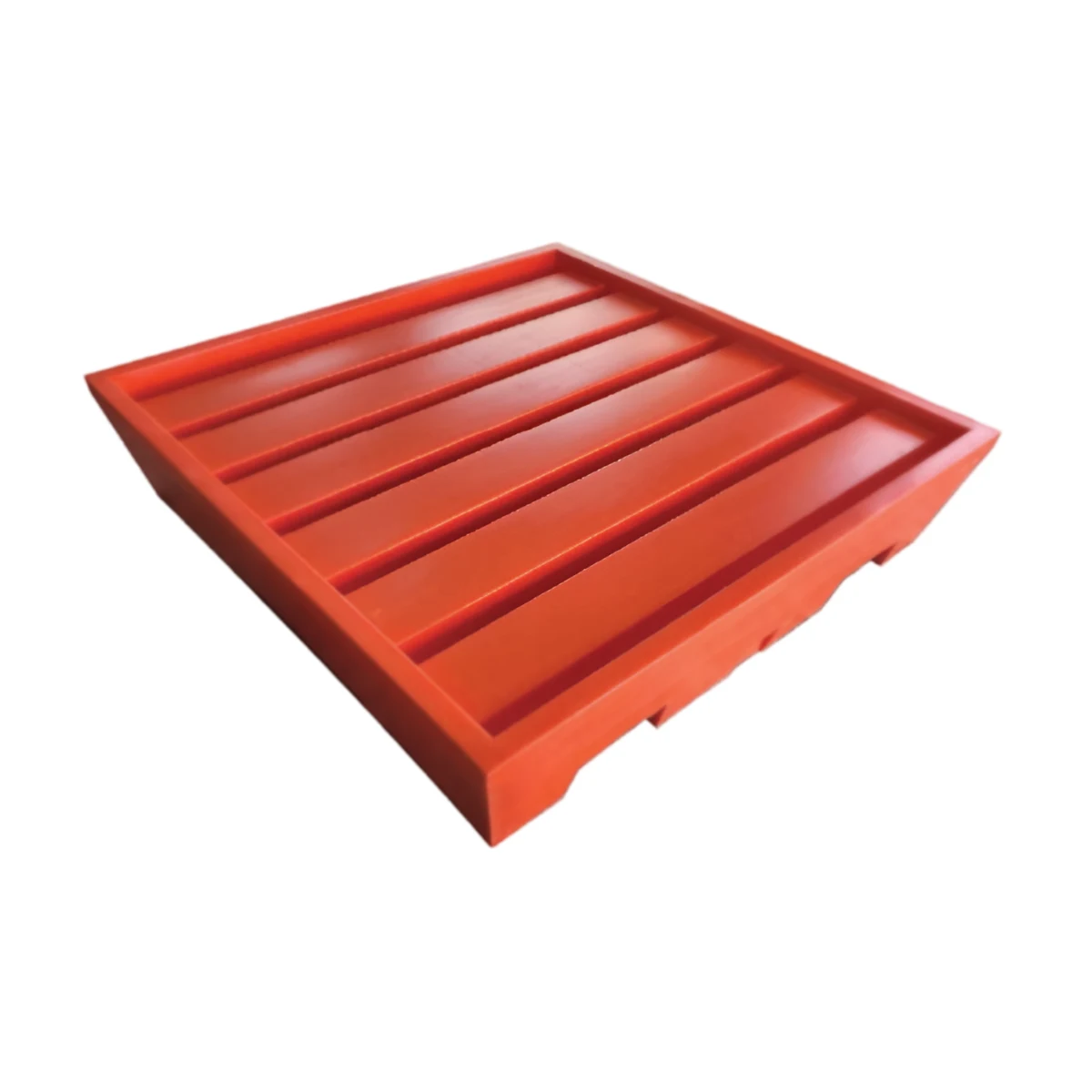
Pallets in chemical environments are half the story; the other half is secondary containment. New Zealand’s hazardous-substances rules build secondary containment into the storage duty for many substances, with pallet bunds suiting certain packaged, non-flammable goods and IBC bunds covering larger containers — suitability always depending on the substance, quantity, fire risk and required containment capacity. Our spill-containment range covers the common configurations:
IBC Containment
Single IBC Spill Containment Bund – 1100L (Rotomoulded)
NZ-Made Drum Bund
4 Drum Spill Bund – 250L (Rotomoulded, NZ Made)
Before any pallet or bund goes near chemicals, confirm chemical compatibility, sump capacity, applicable dangerous-goods requirements and how containment fits the site’s emergency plan. And one specialist note: standard plastic pallets can accumulate static electricity — sites handling flammable vapours or combustible dusts should get specialist advice on conductive or anti-static equipment rather than assume.
Plastic vs timber: the safety comparison at a glance
| Safety consideration | Plastic pallets | Timber pallets |
| Nails and splinters | None — moulded construction | Develop exposed nails, splinters, broken boards |
| Moisture | Non-absorbent | Absorbs water and liquids; gains weight |
| Dimensional consistency | Repeatable within a model | Varies with damage, repair and moisture |
| Cleaning | Washable, non-porous surfaces | Porous; hard to clean and sanitise properly |
| Empty-pallet weight | Nestable/export models genuinely light | Varies; increases when wet |
| Damage behaviour | Cracks or deforms — visibly | Splits, loosens boards, sheds fasteners |
| Racking use | Only rack-rated models — clearly specified | Must be verified for rack and load |
| Export treatment | Outside ISPM 15 entirely | Raw wood requires compliant treatment and marking |
| Fire considerations | Combustible — factor into fire load | Combustible — factor into fire load |
Neither material is automatically safe. The safest pallet in any workplace is the correctly rated, undamaged one selected for the actual load and handling system — this guide’s whole argument is that plastic makes that standard easier to hold.
Choosing a safer pallet: the three ratings and a trial
Every pallet worth buying publishes three load ratings, and they are not interchangeable: static (stationary on a level floor), dynamic (moving on forks or a jack), and racking (spanning beams or supports). A pallet with a heroic static number can still be wrong for unsupported racking — the racking figure is the one that prevents the dangerous surprise.
Beyond the numbers, match the pallet to the whole application: load distribution, rack support pattern, equipment entry, operating temperature, chemical exposure, hygiene needs, anti-slip requirements and expected trips. For heavier or unusual loads, the export-grade range covers most general New Zealand work — and for anything beyond it, or for resource and processing sites with specialised formats (see our mining and resources solutions), talk to our team about reinforced options.
Then, before rolling anything out fleet-wide, run a controlled trial: your real product load, your forklifts, your racking, your wrapper, your wash-down. An afternoon of testing finds the compatibility problem that would otherwise arrive with the full delivery.
The plastic pallet safety checklist
Before a pallet enters service, confirm: the model suits the application; the load is within static, dynamic and racking ratings; weight is evenly distributed; racking support arrangement matches the pallet’s design; fork entries are undamaged; the pallet sits flat; the load is stable and restrained; the deck is free of oil, water and loose material; chemical and temperature compatibility are checked; damaged pallets are quarantined where nobody can “helpfully” return them to the stack; and workers know how to report defects.
Pallet choice complements — never replaces — traffic management, forklift licensing, racking inspections and hazardous-manual-task controls. It’s one strong link in the chain, and chains care about every link.
Frequently Asked Questions
Plastic pallets eliminate the timber-specific hazards — splinters, exposed nails, loose boards and moisture absorption — and add consistent dimensions and washable surfaces. Overall safety still depends on selecting the correct model, staying within its load ratings and quarantining damaged pallets. Plastic removes hazard categories; management practice determines the rest.
Many nestable and export plastic pallets weigh noticeably less than heavy reusable timber pallets, which reduces the force involved in handling empty pallets. Rackable and steel-reinforced plastic models can be heavier than timber because they’re engineered for demanding loads — always compare the actual tare weight for the model you’re considering.
Many models include anti-slip features — rubber grommets, textured deck areas or raised ribs — to improve friction between the deck and the load. The feature set varies by model, so if load slip is a known risk in your operation, confirm the anti-slip specification for the exact pallet, and remember that a contaminated deck defeats any surface treatment: housekeeping remains part of the control.
A quick visual check before every loading is the baseline — fork entries, runners, flatness and visible cracks take seconds to scan. On top of that, a scheduled inspection of the pallet pool catches slow deterioration, and a strict quarantine habit for anything questionable keeps damaged pallets from re-entering circulation. Recording repeat damage patterns is the step most operations skip and the one that finds root causes.
Standard plastic pallets can accumulate static charge, which is irrelevant in most warehouses but a genuine consideration around flammable vapours, gases or combustible dusts. Sites with those exposures should seek specialist advice and specify conductive or anti-static equipment where the risk assessment requires it, rather than using standard pallets by default.
No — a cracked, deformed or structurally damaged pallet should be quarantined and assessed, not returned to service because it “still holds”. Damage near runners, fork entries or load-bearing ribs compromises performance in ways that aren’t visible under an empty pallet, and the failure mode arrives when the pallet is loaded and moving.
Some are, in the right configuration — typically paired with bunded pallets or IBC bunds providing secondary containment. Suitability depends on chemical compatibility, concentration, temperature, fire classification and the containment capacity your regulations require. Verify against the specific substance rather than the material family, and involve whoever owns your dangerous-goods compliance.
The one matched to your actual load, equipment and environment — there’s no universally safest model. A lightweight export pallet minimises manual-handling force; a rack-rated pallet prevents racking failures; an automated shuttle pallet keeps people out of automated systems. The selection process in this guide is the answer; the product is its output.
Talk to people who think about this daily
We supply plastic pallets, crates, bins and spill containment across New Zealand from our Auckland hub at Wiri, with nationwide delivery. Tell us your load, your racking and your environment, and request a quote — we’ll match the pallet to the job, and tell you honestly if the cheaper model is the wrong one.
Found this useful? Share it.
Share:
Ready to Get a Quote?
Speak with our commercial team for wholesale pricing and product recommendations.
Request a Quote